

Some musicians rise fast and fade just as quickly. Bob Seger spent well over a decade grinding through Detroit bars and small Midwest clubs before he ever broke out nationally — and once he did, he built a catalog durable enough that it’s still generating real income more than sixty years after he first picked up a microphone.
At 80, having retired from touring back in 2019, Bob Seger’s net worth in 2026 is most reasonably estimated somewhere between $60 million and $90 million. The range is wide because the details of his royalty income and property holdings were never fully made public, but there’s broad agreement on where nearly all of that wealth actually came from: music, and almost nothing else.
Quick Facts
| Category | Detail |
|---|---|
| Full Name | Robert Clark Seger |
| Born | May 6, 1945, Detroit, Michigan (some records cite Dearborn) |
| Age (2026) | 80 |
| Raised In | Ann Arbor, Michigan |
| Band | Bob Seger & the Silver Bullet Band |
| Records Sold | 75 million-plus worldwide |
| Honors | Rock and Roll Hall of Fame (2004); Songwriters Hall of Fame (2012) |
| Retired From Touring | 2019 |
| Bob Seger Net Worth (2026) | Estimates range from $45M to $90M; most credible sources cluster between $60M and $80M |
Who Is Bob Seger?
Bob Seger is the voice behind some of the most enduring songs in American rock — that raspy, unmistakable delivery paired with lyrics about working-class life, love, aging, and the open road. He’s not someone who chased trends or reinvented himself every few years. He simply kept writing honest songs about ordinary experiences, and audiences kept responding to that honesty for over half a century.
He fronted the Silver Bullet Band and released more than a dozen studio albums across a recording career that officially ran from the early 1960s through 2019. Songs like “Night Moves,” “Turn the Page,” “Old Time Rock and Roll,” “Against the Wind,” and “Like a Rock” are still fixtures on classic rock radio today, decades after they were first recorded. He was inducted into the Rock and Roll Hall of Fame in 2004 and the Songwriters Hall of Fame in 2012 — recognition that reflects both his commercial success and his lasting influence on the genre he helped define.
A Detroit Childhood Shaped by an Absent Father
Robert Clark Seger was born on May 6, 1945, in Michigan — most sources point to Detroit, though a handful cite the nearby city of Dearborn. His father, Stewart, worked as a medical technician for Ford Motor Company and also played several instruments around the house, which gave young Bob his earliest exposure to music before he was old enough to really understand what it meant.
The family’s stability didn’t last. When Bob was around ten years old, his father left for California, leaving the family behind — a departure that hit hard both financially and emotionally. His mother, Charlotte, raised Bob and his older brother George largely on her own, and money stayed tight throughout his childhood. The family eventually settled in Ann Arbor, moving through several addresses as they worked to get by. Bob attended Lincoln Park High School briefly before finishing at what was then called Ann Arbor High School (now Pioneer High School), where he ran track and field, graduating in 1963.
He’s often credited Little Richard as the artist who first inspired him to pursue music seriously — an influence that, combined with his Detroit-area upbringing, shaped both the sound and the working-class themes that would eventually define his songwriting.
The Long Road to Night Moves
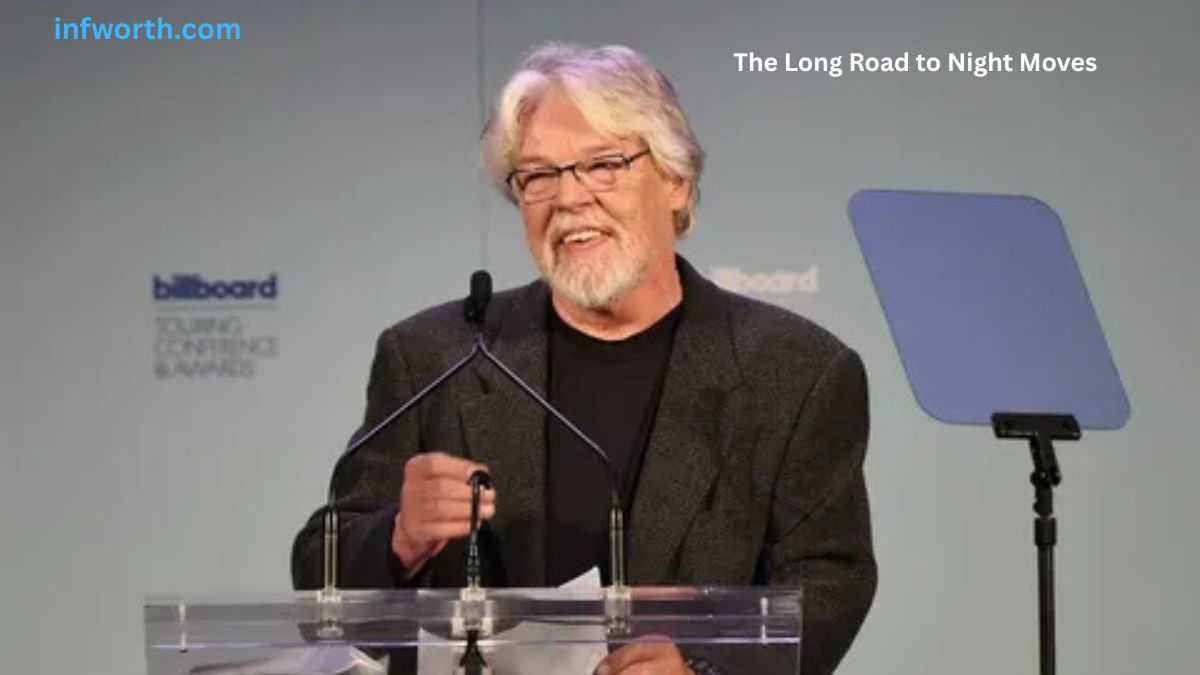
Seger started performing publicly in 1961, at just sixteen, as part of a three-piece high school band called the Decibels. Over the next several years he moved through a string of Detroit-area groups — the Town Criers, then Doug Brown and the Omens — building real experience and real local connections. It was through Doug Brown and the Omens that he met Edward “Punch” Andrews, who’d go on to manage him for essentially his entire career.
In 1966, he released “East Side Story” on the small Hideout Records label under the name Bob Seger and the Last Heard, which led to a deal with Cameo-Parkway Records. He put out four singles there, including “Heavy Music” (1967), which peaked at number 103 on the Billboard chart — just outside the Hot 100, but enough to generate genuine industry buzz.
When Cameo-Parkway collapsed, Seger signed with Capitol Records, turning down a reportedly higher offer from Motown because he believed Capitol was a better fit for the sound he was chasing. Capitol rebranded his group as The Bob Seger System, and their 1969 album “Ramblin’ Gamblin’ Man” reached number 62 on the Billboard pop albums chart. They couldn’t repeat that success, though, and the System eventually broke apart.
What followed was years of genuinely hard, unglamorous work — touring relentlessly across the Midwest through the early 1970s, playing bars and small venues, building a fiercely loyal regional fanbase while remaining almost completely unknown outside Michigan. He formed the Silver Bullet Band in 1973, and three more years of heavy touring followed before everything finally broke open at once.
In 1976, Seger released “Live Bullet” and “Night Moves” back to back. “Night Moves” climbed to No. 8 on the Billboard 200, and the title track became a genuine national hit. After more than fifteen years of grinding, he finally became a household name at 31 — a late breakthrough by rock star standards, and one that shaped how durably he approached the fame that followed.
Building a Catalog That Never Really Aged
Once “Night Moves” broke through, Seger’s output stayed remarkably consistent for the next decade and beyond. “Night Moves” itself launched him nationally alongside “Beautiful Loser.” “Stranger in Town” (1978) went platinum, delivering “Hollywood Nights,” “Still the Same,” “We’ve Got Tonight,” and “Old Time Rock and Roll.” “Against the Wind” (1980) won the Grammy for Best Rock Performance by a Duo or Group with Vocal and hit number 1 on the Billboard 200. “Like a Rock” (1986) produced the title track that would later become one of the most recognizable songs in American advertising history — more on that shortly.
His 1994 “Greatest Hits” compilation became one of the best-selling albums of that year, introducing his catalog to a younger generation of listeners who’d missed his peak the first time around, and it’s since gone 7x platinum in the US. Beyond his own albums, his songwriting credits include “Shakedown,” written for 1987’s “Beverly Hills Cop II,” which reached number 1 on the Billboard Hot 100 — his only chart-topping single, despite the fact he didn’t perform it himself. He also co-wrote the Eagles’ “Heartache Tonight” from their 1979 album “The Long Run,” which likewise hit number 1 — a less-discussed credit that adds meaningfully to his songwriting royalty stream even now.
So What Is Bob Seger Actually Worth in 2026?
This is genuinely one of those cases where credible sources land in noticeably different places, and it’s worth being upfront about that rather than picking one number and presenting it as settled fact. Celebrity Net Worth, one of the more widely cited trackers in this space, puts him at $60 million.
Other current estimates run higher — roughly $70 million to $90 million — largely depending on how much weight a given source puts on his ongoing royalty, streaming, and licensing income, none of which is fully public. A few older or more conservative estimates put him as low as $45 million, though these appear to be based on outdated figures that don’t reflect his continued passive income since retiring from touring.
Weighing all of that together, a range of $60 million to $80 million is the most defensible way to think about Bob Seger’s net worth heading into 2026 — broad enough to account for genuine uncertainty in his private royalty and property holdings, but grounded in the parts of his financial picture that are actually well documented. What virtually every source agrees on, regardless of the exact figure, is that his wealth comes almost entirely from music itself — record sales, touring, songwriting royalties, and licensing — rather than outside business ventures or brand ambassador deals of the kind that pad out a lot of contemporary artists’ net worth.
How the Money Actually Adds Up

Record Sales
Seger sold more than 75 million records worldwide over his career, with his biggest commercial run stretching from 1976 through the mid-1990s, when albums like “Night Moves,” “Stranger in Town,” “Against the Wind,” and “Greatest Hits” moved serious volume through Capitol Records. “Greatest Hits” alone sitting at 7x platinum status in the US gives some sense of the scale. Physical and digital sales still generate income today, just at a much smaller fraction of his peak-era numbers.
Songwriting Royalties and Publishing
This is almost certainly his primary income source in retirement. Every radio play, every stream on Spotify or Apple Music, every film or TV placement generates royalties, and his catalog gets heavy rotation on classic rock stations across the country — income that keeps flowing without him needing to release anything new. For an artist at his level of catalog recognition, radio royalties alone are commonly estimated in the range of $1–3 million annually, with streaming adding a further steady stream as new listeners continue discovering his music decades later.
The Chevy “Like a Rock” Deal
This is the piece of Bob Seger’s financial story that gets overlooked most often, and it might be the single most significant commercial deal of his career outside record sales. In 1990, an advertising executive working on a General Motors truck campaign came across Seger’s 1986 song “Like a Rock” and felt it captured exactly what Chevrolet wanted to communicate. GM approached him about licensing it. He turned them down — more than once. He eventually changed his mind after a conversation with a GM plant worker reminded him of his own working-class Detroit roots and how many jobs depended on the American auto industry.
The resulting “Like a Rock” Chevy campaign ran from 1991 to 2004 — thirteen years — becoming one of the most recognizable advertising campaigns in American television history, airing regularly during Super Bowls and NFL broadcasts throughout that entire run. The financial terms were never made public, but a national campaign of that length and prominence is reasonably estimated to have generated millions of dollars over its run. Seger himself has said he’s glad he eventually agreed: “It sold a lot of trucks to save a lot of jobs, and this is my home state.”
Touring Revenue
Before he retired in 2019, touring was his most consistent high-earning income source across four decades, built on a reputation for genuinely energetic live shows and a famously loyal audience. His final run, the Travelin’ Man Tour, began in September 2018 and wrapped in 2019. Arena-level tours for an artist of his stature typically gross tens of millions of dollars per run, and his 1976 “Live Bullet” album — recorded at Cobo Arena in Detroit — remains one of the most celebrated live rock recordings ever made, still selling nearly fifty years after its release.
Streaming
Songs like “Old Time Rock and Roll,” “Turn the Page,” “Night Moves,” and “Against the Wind” collectively rack up millions of streams every month across Spotify, Apple Music, YouTube, and Amazon Music. For a retired artist releasing no new material, this is entirely passive income — classic rock catalogs with his level of cultural recognition typically generate somewhere between the low hundreds of thousands and low millions annually from streaming alone.
Life at Home in Michigan
Seger’s primary residence is a custom-built, roughly 18,000-square-foot lakefront home in Orchard Lake Village, Michigan, sitting on about four acres with nearly 500 feet of frontage on Upper Straits Lake, reasonably estimated at around $9.6 million based on public records. He and his wife, Juanita, completed the home in 2009 after buying an adjoining lot for $1.2 million and redeveloping the property from the ground up.
The house includes eight bedrooms, a two-story library, a game room, a golf simulator, and a converted carriage house that now serves as a private music studio, plus additional garage space reflecting his interest in classic cars — including a 1971 Ford Mustang 429 SCJ Super Cobra Jet, a 2011 Porsche Carrera S, and a 2013 Jeep Wrangler Unlimited Rubicon. A small chimney fire occurred at the property on October 31, 2021, contained quickly with limited damage and no injuries. He also owns a second residence in Florida.
A Private Life, By Design
Seger’s personal life has been considerably less publicized than his music. His first marriage, to Renee Andrietti in 1968, lasted less than a year. He was in a long-term relationship with Jan Dinsdale from 1972 to 1983. A second marriage, to Annette Sinclair in 1987, also ended within a year. His third marriage, to Juanita Dorricott in 1993, is the one that’s lasted — they married privately and have two children together, whom Seger has kept almost entirely out of public view, an unusually private choice for someone with his level of fame, but consistent with the grounded, unpretentious persona that runs through his music.
Since retiring from touring in 2019, he’s lived quietly in Michigan. He’s a skilled sailor who once raced competitively and still spends time on his sailboat navigating the Great Lakes. He made a rare one-off public music appearance in 2023 but has largely stayed out of the spotlight since. At 80, he remains one of the elder statesmen of American rock, with a cultural footprint considerably larger than his current public visibility would suggest.
Why His Wealth Has Held Up So Well

Most musicians see their income peak alongside their fame, then taper off as culture moves on to something new. Seger’s income has proven unusually resilient for one specific reason: his songs were built around experiences that don’t really go out of date. “Night Moves” is about young summer romance. “Turn the Page” is about the loneliness of life on tour. “Against the Wind” is about aging and regret.
None of these are tied to a specific cultural moment — they’re about feelings each new generation rediscovers on its own, which is exactly why classic rock radio still leans on his catalog heavily in 2026, why his songs keep showing up in films and shows, and why his streaming numbers have stayed strong decades after they were recorded. The Chevy campaign extended that durability even further, introducing “Like a Rock” to an enormous audience that might never have sought out a Bob Seger album otherwise.
Also read: Jennifer Aniston Net Worth 2026
The Bottom Line
Bob Seger’s net worth in 2026 most reasonably sits between $60 million and $80 million — a genuinely wide range, but one that reflects real uncertainty around private royalty and property details rather than sloppy estimation. What’s not uncertain is how he got there: over fifteen years of unglamorous touring before his first real national hit, a Motown offer turned down on instinct, a Chevy deal turned down multiple times before his conscience changed his mind, and a catalog of songs written honestly enough that people are still discovering them more than sixty years after he first started performing.
At 80, with no more tours on the calendar and no new albums coming, the music is still doing all the work — which, for Bob Seger, always seemed to be the entire point.
Frequently Asked Questions
What is Bob Seger’s net worth in 2026?
Most credible estimates place it between $60 million and $80 million, though figures across different sources range from $45 million to $90 million.
How does Bob Seger still make money in retirement?
Primarily through songwriting royalties, streaming income, ongoing licensing of his catalog, and continued record sales — all passive income requiring no new activity from him.
What was the “Like a Rock” Chevy deal worth?
The exact figure was never publicly disclosed, but the campaign ran from 1991 to 2004 — thirteen years of national TV exposure including Super Bowl airings — making it one of the longest-running music licensing deals in advertising history.
Is Bob Seger still alive in 2026?
Yes — he’s 80 years old, born May 6, 1945, and lives privately in Michigan since retiring from touring in 2019.
What is Bob Seger’s most-streamed song?
“Old Time Rock and Roll” and “Night Moves” consistently rank among his most-streamed tracks, each with hundreds of millions of plays.












1 Comment. Leave new
[…] Also read: Bob Seger Net Worth 2026 […]